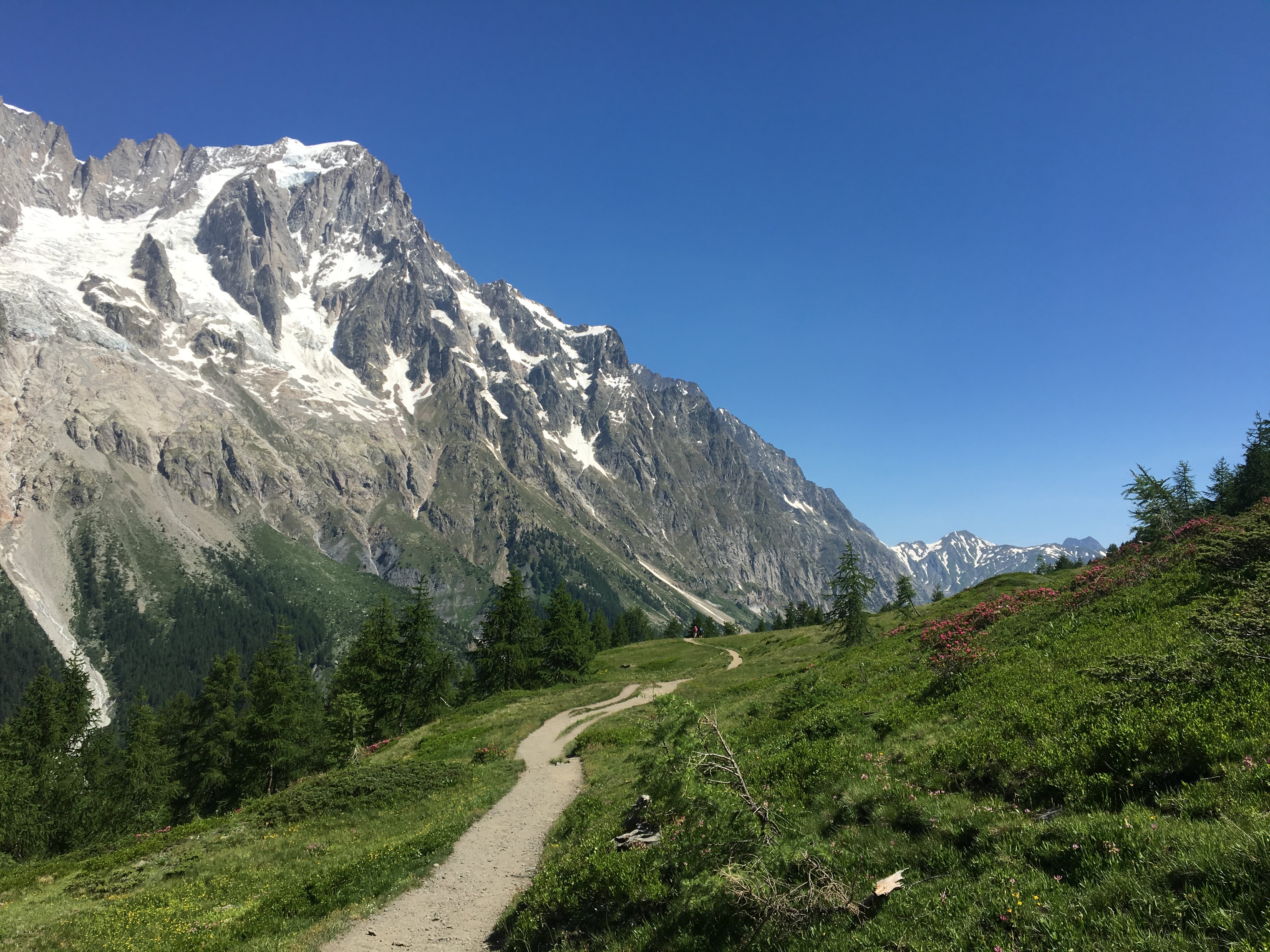
Shortcut to the posts about each stage.
I did the Tour du Mont Blanc in late June – early July 2019 as a solo female traveler in my late 20s. When preparing for this trip, I read a lot of other people’s blog posts which helped me make my trip go smoothly. I want to help others the same way so I am documenting the details of my here in case it helps others plan their own versions. I planned this one myself, although self-guided tour agencies do exist for the TMB, most of them do not support solo travelers for “safety reasons” (which I think is a euphemism for financial reasons – I met many solo travelers like myself on the trip).
Among all the trips I’ve taken the TMB was one of my top life experiences. I highly recommend it if you enjoy long hikes, intense uphills, cheese, and European culture.
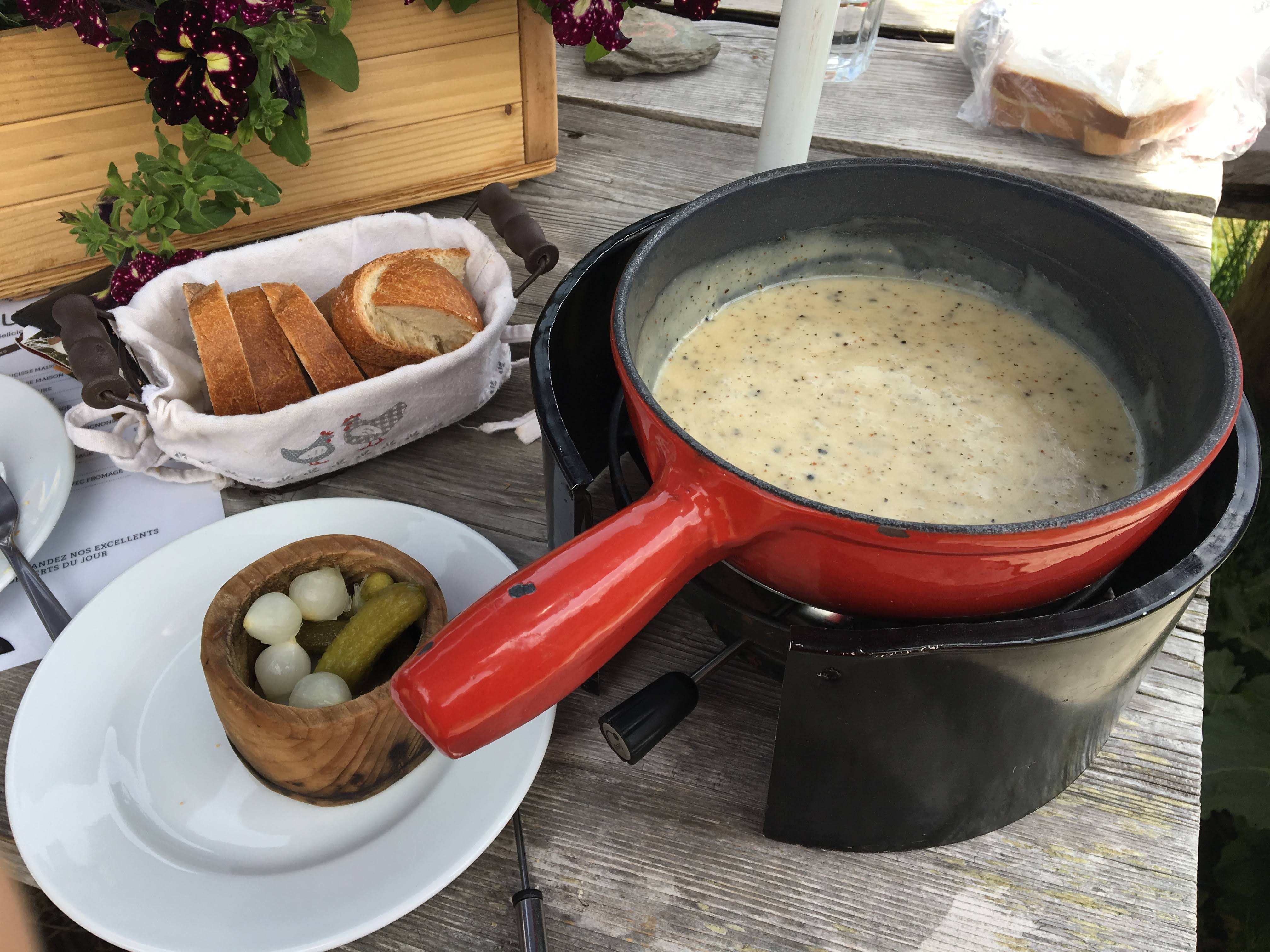
I was lucky to have, all things considered, very good weather during the TMB. The region was actually actually in the middle of a heat wave so that made the uphills tough sometimes, but it only rained for about an hour of my hiking time. I hear this is very uncommon so hikers should be prepared for rain, snow, heat, and cold — any weather conditions are possible in the Alps.
I added a luggage transfer via Besson Taxi so that I didn’t have to carry all of my stuff with me every day. I needed to check a bag anyway due to the hiking poles, and I didn’t particularly want to check my backpack in case the airline lost the bag. In hindsight, I could have definitely carried all of my stuff with me, because most of my stuff in the big bag went unused. However, it was still nice for stress purposes to know I had it.
What did I pack?
- Hiking poles
- Hiking boots
- Wide-brimmed sun hat
- Bandana
- Long sleeved hiking shirt
- Short sleeved hiking shirt
- Hiking shorts
- Hiking pants
- Many pairs of hiking socks
- Day pack
- Rain jacket
- Rain pants (unused)
- Rain cover for day pack
- Lightweight down jacket (unused)
- Silk sleeping bag liner for the refuges
- 1-liter water bottle (primary) and a backup 2-liter water bladder
- Blister supplies (turned out to be highly necessary)
- Lightweight dress (to change into at the end of the day)
- Flip flops for the end of the day and for use at the refuges and their showers (they provide shoes but I prefer to use my own)
- 2-prong electrical adapter from US to Europe
- Lots and lots of sunscreen
- Wet wipes
- External battery
- Quick-dry mini towel
- Personal items (Kindle, contacts, toiletries…)
- Kev Reynolds’s Tour du Mont Blanc guidebook
Overall, I found the Kev Reynolds book to be useful. However I tended to rely more on the signs on the trail than his instructions, which I found overly wordy sometimes and they didn’t always match up with the current state of the trail. So while I recommend that book, I also recommend people follow the signs when they are available.
In the cases where the trail wasn’t well-signed, which definitely did happen, the book was useful to have. If you are looking to cut down on weight, one thing you can do is take pictures of the book’s pages for every stage that you are doing, because the majority of the book won’t be relevant to you during the hike.
I found high school-level French to be useful during the TMB, especially (surprisingly) during the Italian portions. It seems that most people in Switzerland and France have English as their second language, whereas in the Alpine region of Italy, French is their best second language.
As for traveling solo, it was a complete non-issue for me. You can find hiking buddies if you want them, which I did for 3 of the 9 days. However, hiking solo is also quite nice because you can go at your own pace. If you take the main trails (not the variants) then you can always count on there being other people around.
Going in late June was a good choice overall. The trip was planned somewhat at the last minute, and starting the trip in early July, some of the key locations were already sold out. I found it necessary sometimes to call the refuges rather than rely on email. The TMB becomes most crowded in the second half of July and August. There were definitely times that it felt crowded to me, but a great deal of the time I had the solitude that I was looking for. If you hate crowds and are able to handle more rigorous trails and ambiguous signage, I recommend the variants.
I did the trip in 9 days, but originally planned to do it in 10. I compressed two of the hiking days together on a whim. I had one rest day in Courmayeur planned, but this last-minute decision led to having two rest days in Courmayeur. I feel that one rest day in Courmayeur is sufficient and don’t recommend two. Courmayeur was a good location for a rest day because it’s a real town and the first 3 days were definitely the most intense. Champex could be another good location for a rest day depending on your itinerary.
Here is a link to all of the pages for the various stages of the trip.
- Stage 1 – Les Houches to Les Contamines
- Stage 2 – Les Contamines to Refuge des Mottets
- Stage 3, 4 – Refuge des Mottets to Courmayeur
- Stage 5 – Courmayeur to Rifugio Bonatti (Val Ferret)
- Stage 6 – Rifugio Bonatti (Val Ferret) to La Fouly
- Stage 7 – La Fouly to Champex
- Stage 8 – Champex to Trient
- Stage 9 – Trient to Argentière
- Stages 10, 10.5 – Argentière to Chamonix
 Solo Tour du Mont Blanc Trip